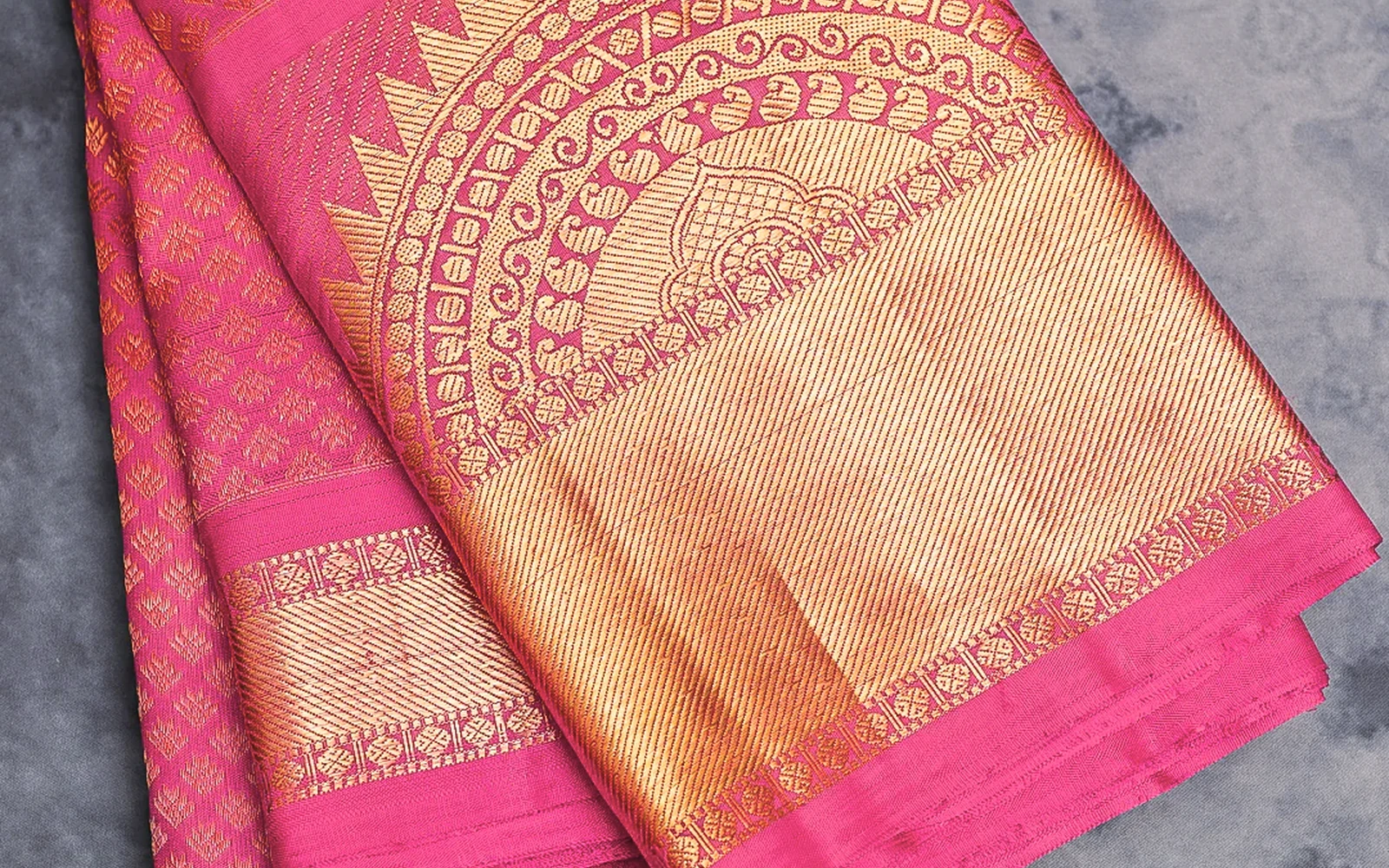
A practical, non-destructive guide to fibre disclosure, Silk Mark, texture, lustre, documentation and responsible verification.
Begin with Disclosure, Not a Home Test
The safest first step is to read the stated fibre composition and ask the seller to put the claim in writing. “Silk saree” can be used loosely in the market, so confirm whether the body is declared pure silk, silk-cotton, art silk or another blend. Also ask whether the blouse piece and border use the same composition. A clear invoice, product specification and available certification create a stronger basis for trust than appearance alone.
Look for Relevant Certification
Where applicable, ask whether the saree carries a valid Silk Mark label or other traceable documentation. Certification should correspond to the actual item, not merely to the seller’s general catalogue. Check that labels are intact and that the invoice identifies the product. Certification helps, but buyers should still compare the claim, product details and seller transparency.
Observe Lustre and Colour Movement
Natural silk often reflects light with depth rather than a flat, mirror-like shine. The colour can appear to shift subtly when the fabric is moved because light interacts with the fibre and weave. This is a clue, not proof: synthetic fibres and finishes can imitate shine. Compare the saree in daylight and indoor light and examine both the body and reverse side.
Examine Texture and Weave
Silk can feel smooth while still having a natural, responsive texture. Handwoven or complex woven sarees may include small irregularities that do not automatically indicate damage. Examine the yarn, selvedge, back of motifs and transition between body and border. Perfect visual uniformity can occur in both high-quality and synthetic products, so texture must be considered with documentation.
Avoid Damaging Burn Tests
Online advice often recommends burning loose threads, but this can damage a valuable saree, create unpleasant fumes and produce misleading results when the thread contains blends, dyes, finishing agents or jari. Do not cut or burn the product. For a high-value purchase, request professional or laboratory verification through an appropriate textile testing service.
Ask Better Questions Before Buying
Request the declared fibre composition, weave type, origin or production information where available, jari description, product weight, blouse details, care instructions, return terms and authenticity documentation. A trustworthy product page should answer many of these questions before you enquire. Keep screenshots or written confirmation for significant purchases.
Need Product-Specific Information?
Send the product URL and ask for current fibre, weave, border, pallu, blouse, authenticity, care and shipping details.
Contact Customer Support